Airport Security
- 4.4
- Rating
- 100.00M
- Installs
- Free
- Price

 Analysis by App-foxy
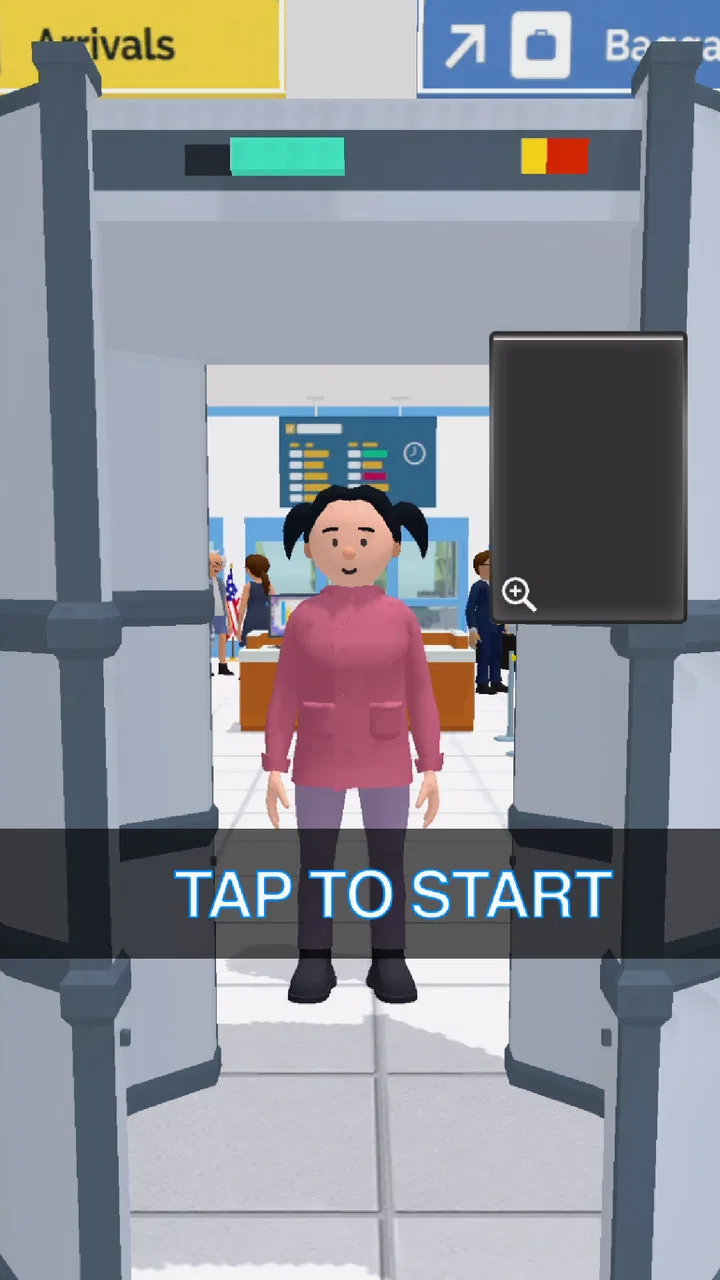
I went into Airport Security expecting a quick casual distraction, and that is exactly where it makes the strongest impression. Developed by Kwalee Ltd, this free game puts me behind an airport checkpoint, where my job is to inspect travelers, spot suspicious items, and keep the terminal safe. The idea is easy to understand within moments, but the appeal comes from making fast judgments while the pressure gradually builds.
That simple setup makes it a useful choice when I want something I can play in short bursts rather than a game that demands a long session. I can pick it up while waiting for an appointment, play a few rounds, and stop without losing the thread. At the same time, it is not a perfect fit for everyone. Players looking for deep strategy, a detailed airport simulation, or a story-driven adventure will probably find the experience too lightweight.
What matters most here is whether you enjoy quick visual decisions and the satisfaction of catching problems before they pass through security. If that sounds appealing, this casual game has a clear purpose and a surprisingly accessible rhythm. If you prefer carefully planned moves or long-term progression, I would look at another type of game before downloading it.
You May Also Like

 AccuWeather: Weather Radar
AccuWeather Review: A Quick, Clear Forecast for Everyday Decisions
For everyday plans, the best forecast is the one you can understand quickly. AccuWeather makes rain timing, radar, and local conditions easy to act on, with a few trade-offs.

 Hill Climb Racing
Why Hill Climb Racing Still Turns Crashes Into One More Run
A tiny car, a bumpy hill and one more upgrade: Hill Climb Racing keeps resurfacing because its simple chaos makes every near-miss feel personal.

 AliExpress - Shopping App
AliExpress Makes Global Shopping Feel Personal, but Shoppers Bear the Risk
AliExpress turns a global marketplace into a pocket-sized discovery engine. Its reach is useful, its shopping loop compelling, and its trade-offs easy to miss.

 Lords Mobile: Kingdom Wars
Lords Mobile Is a Kingdom-Building Routine, Not a Quick Match
A case-by-case verdict on the building, battles, device demands, and social commitments that make Lords Mobile rewarding for some players and exhausting for others.

 PDF Scanner app - TapScanner
TapScanner Makes Paperwork Easier to Capture, Check, and Share
TapScanner makes scanning with a phone feel less like a rescue operation and more like a dependable step in getting work done. Its capture tools are useful, though not flawless.

 Block Blast!
 Shows How Much a Puzzle Game Can Leave Out
A quiet grid game shows why puzzle players increasingly value instant clarity, repeatable skill and low-pressure play—and where the genre still needs to catch up.
More From Our News Desk
View All News


How I Decide Whether Airport Security Is Worth Playing
I judge Airport Security by whether its checkpoint routine still feels satisfying once the first novelty passes, not by how quickly I can learn it. I look for a good reason to return, a comfortable place for it in a normal day, and signs that the repeated decisions remain engaging rather than becoming automatic. That makes the next question less about the first session and more about what keeps the game in rotation.
The basic loop is clear, quick, and easy to learn
The central activity is screening people at an airport checkpoint. I look at what is presented to me, decide whether something appears unsafe or suspicious, and act before the traveler moves on. The controls and objective are straightforward enough that I never felt I needed a tutorial-heavy introduction. That is important for a casual title because the first few minutes should explain the fun rather than bury it under instructions.
The best part of the loop is the small moment of uncertainty before making a decision. I am not simply tapping through identical passengers. I have to pay attention, notice details, and decide whether I should let someone continue or intervene. That gives the game more involvement than a completely passive time-killer, even though the overall design remains simple.
I also like that the airport setting gives the actions a recognizable context. Checking a traveler feels more purposeful than tapping random objects, and the idea of maintaining order creates a natural reason to keep playing. The game does not need a complicated narrative to make the checkpoint feel meaningful.
Short sessions are the main reason to install it
My first decision criterion would be session length. Airport Security works best when I want immediate entertainment without committing to a campaign. It is suitable for a spare minute or two, but it can also become a longer casual session when I am in the mood to keep clearing checkpoint situations.
This flexibility makes it especially approachable for people who do not usually play games on mobile. There is no need to remember a complex control scheme or reconstruct a large story after a break. I can return later and understand what I am doing immediately. That convenience is one of its practical strengths, particularly on a phone used for many small moments throughout the day.
The trade-off is that the same simplicity can limit its staying power. Once the novelty of inspecting travelers fades, the game depends heavily on whether the act of spotting trouble remains satisfying for you. I found it enjoyable in bursts, but I would not treat it as my only mobile game.
Visual attention matters more than traditional gaming skill
This is not a game that rewards complicated combinations, precise platforming, or elaborate tactical planning. The important skill is observation. I need to scan what is in front of me, recognize a suspicious situation, and respond without overthinking every decision.
That makes it a good match for players who enjoy hidden-object elements, light inspection tasks, and decision-making under mild pressure. It can also suit someone who likes the feeling of having a job to perform inside a game. The checkpoint role gives each interaction a practical flavor, even though the experience is designed for entertainment rather than realism.
However, players who dislike mistakes may find the judgment-based design frustrating. When a game asks me to make quick calls, I have to accept that the fun comes partly from being challenged. Anyone wanting a completely relaxing experience with no consequences may prefer a slower puzzle game or an idle title.
Its audience is broad, but the age label still matters
The game is listed for Everyone 10+, which places it in a generally accessible space while recognizing that the security and bad-guy theme may not be aimed at very young children. I would consider it more suitable for older children, teenagers, and adults who enjoy simple checkpoint gameplay than for preschool players.
It is also a free game, so trying it does not require an upfront purchase. That lowers the barrier for casual players who are unsure whether the premise will hold their attention. The current version is 2.8.7, and the game supports devices running Android 7.0 or later. Those details make it easier to judge compatibility before spending time setting it up.
On the popularity side, the game has passed 100 million installs and holds a 4.5 average from around 726 thousand ratings, with roughly 7.6 thousand written reviews. Those figures suggest that the quick checkpoint concept has reached a large audience, although popularity alone does not guarantee that its repetitive style will suit every player.
Where the game feels strongest
The strongest quality is its immediate readability. I know what I am doing, why I am doing it, and what kind of attention the game expects from me. That clarity is valuable on a touchscreen, where a complicated interface can make a casual game feel like work.
Another strength is the role-playing angle. I am not just completing abstract levels; I am acting as the person responsible for keeping an airport checkpoint under control. That small change in framing makes ordinary taps feel more connected to the setting. It is a good example of how a familiar everyday situation can turn a basic mobile interaction into a more memorable one.
The game also benefits from being easy to show to another person. If a friend asks what I am playing, I can explain the premise in one sentence and hand over the phone without a long lesson. That makes it a reasonable choice for shared downtime, especially when people want something approachable rather than competitive or complicated.
Small decisions make the experience more interesting
One non-obvious strength is that the game encourages me to slow down just enough to inspect what is happening, even though the overall pace is casual. If I rush every interaction, I lose the part that makes the checkpoint role enjoyable. My practical tip is to treat each traveler as a short observation exercise instead of tapping automatically. That mindset makes the game feel less repetitive.
I also found that it works better when I use it as a focused break rather than background entertainment. Because the main activity depends on noticing details, splitting my attention with a video or conversation can make the experience feel more irritating than fun. A few attentive minutes are usually more satisfying than a long, distracted session.
A second useful insight is that the game can appeal to people who enjoy workplace-style simulations but do not want spreadsheets, management screens, or complicated resource systems. The airport checkpoint provides the fantasy of responsibility without requiring the planning overhead found in larger simulation games. That is a specific niche, and the title fills it more directly than many generic casual games.
Where other casual games may fit better
The right alternative depends on what I want from mobile play. If I want a puzzle with a clear solution and time to think, a traditional logic game is likely a better choice. If I want constant action, an arcade game may provide more excitement. If I want to build something over many sessions, a management or simulation game will probably offer more depth than this checkpoint-focused experience.
Airport Security wins when the appeal is making quick judgments in a familiar setting. It is less convincing when I want a broad system with multiple strategies, extensive customization, or a strong narrative. I would not replace a favorite strategy game with it; I would install it alongside one as a lighter option for moments when I want less commitment.
It is also worth separating this game from realistic airport-management simulations. The appeal here is the individual checkpoint decision, not running every department of a terminal. Someone who wants schedules, staffing, finances, or detailed logistics should choose a management-focused alternative. Someone who wants to feel like a security officer for a few minutes may find this much more accessible.
What may cause friction during longer play
The main limitation is repetition. The core task is clear, but a focused loop can eventually feel familiar. I noticed that the game is easier to enjoy when I accept it as a compact casual activity instead of expecting a constantly expanding experience.
Because it is free, in-app purchases are part of the model, with individual items ranging from $0.99 to $74.99. That is the point I would discuss with anyone sharing a device with children: the game can be downloaded without an upfront charge, but purchases should be handled deliberately. I would check the device’s purchase controls before handing it to a younger player.
The free entry is still useful because it lets me test the central loop before deciding whether it deserves space on my phone. The important question is not whether the game has a large audience; it is whether I enjoy inspecting travelers enough to return after the first session. If the answer is no, paying for optional items will not solve that basic mismatch.
Switching from another casual game is easy
There is very little learning cost when moving from another simple mobile game. The premise is self-contained, and I do not need to study a complicated system before the checkpoint becomes playable. That makes it a low-risk experiment for anyone who wants a different kind of casual interaction.
The real switching cost is time and attention. If I already have a casual game that satisfies my short-session needs, Airport Security must offer a distinct feeling rather than merely another set of taps. Its best argument is the inspection fantasy and the small responsibility attached to each decision. If that theme does not interest me, another casual title may be more rewarding.
I would also avoid treating it as a replacement for every other mobile game. Its role is narrower: it is a quick checkpoint game with an accessible premise. Keeping that expectation in mind makes the decision easier and prevents disappointment caused by comparing it with genres built around depth or long-term progression.
Who I would recommend it to
I would recommend it to someone who likes casual games built around observation, quick choices, and recognizable everyday roles. It is particularly suitable for short breaks, casual experimentation, and players who want a game they can understand immediately. The airport setting gives it a clearer identity than a completely abstract tap-based title.
I would also suggest it to parents or older siblings who want to know whether a younger player can grasp the concept quickly. The Everyone 10+ rating is the sensible boundary to keep in mind, and I would pair that with awareness of the in-app purchase range. The game itself is easy to explain, but device purchase settings still deserve attention.
I would skip it if I need a deep simulation, a long story, competitive multiplayer, or a game that constantly introduces complex new systems. I would also skip it if repeated inspection tasks sound tedious rather than satisfying. In those cases, the usual alternatives in puzzle, strategy, or management categories are more likely to meet the need.
My recommendation after playing
Airport Security is worth trying when you want a focused casual game with an airport checkpoint theme and almost no learning curve. I like its clear role, quick decisions, and ability to fit naturally into small gaps in the day. It succeeds because it turns a simple inspection routine into a playable responsibility instead of pretending to be a full airport simulator.
My recommendation is conditional rather than universal. Download it if you enjoy noticing details, making fast calls, and repeating a compact gameplay loop in short sessions. Keep your expectations modest, pay attention to purchase controls, and judge it by how satisfying the checkpoint task feels after the novelty wears off.
For me, it works best as a secondary casual game: something to open when I want immediate interaction but do not want to invest in a lengthy level or complicated strategy. The large install base and strong average rating show that the concept connects with many players, but the decisive test is personal. If the idea of keeping a terminal safe through quick inspections sounds fun, Airport Security is an easy recommendation to try for free. If you want depth above all else, choose a different category and save this one for a lighter moment.
FAQs for Airport Security
01What is the main objective of Airport Security?
Airport Security is a simulation game where players take on the role of airport security personnel. The main objective is to ensure the safety and security of passengers by inspecting luggage, checking documents, and managing potential threats. Players must be vigilant and make quick decisions to keep the airport running smoothly.
02How does the gameplay of Airport Security work?
In Airport Security, players interact with various mini-games that simulate different security tasks. These include scanning luggage for prohibited items, verifying passports, and questioning suspicious individuals. Success in these tasks requires attention to detail and quick thinking, as players must balance security protocols with maintaining passenger flow.
03Are there any in-app purchases in Airport Security?
Yes, Airport Security offers in-app purchases. Players can buy additional tools, upgrades, or cosmetic items to enhance their gameplay experience. While the core game is free, these purchases can help players progress faster or customize their gaming experience. It’s important to manage these purchases to avoid unintended spending.
04What age group is Airport Security suitable for?
Airport Security is recommended for players aged 12 and above. The game involves decision-making and strategy, which may be challenging for younger players. It also includes scenarios that simulate real-life security situations, making it more appropriate for a slightly older audience who can understand and appreciate the context.
05Does Airport Security require an internet connection to play?
Airport Security can be played offline, but some features may require an internet connection. For example, accessing leaderboards, purchasing in-app items, or receiving updates usually needs connectivity. Playing offline still provides a comprehensive experience, but being online enhances the game's interactive elements.
Pros
- Intuitive user interface for easy navigation.
- Realistic scenarios enhance gameplay immersion.
- Variety of challenges keeps gameplay fresh.
- Engaging graphics and sound effects.
- Offline mode available for play anywhere.
Cons
- Ads can be intrusive during gameplay.
- Limited levels may reduce replayability.
- Some actions feel repetitive over time.
- No multiplayer or social sharing features.
- In-app purchases needed for faster progress.

Airport Security
Gallery